How to Become a Transaction Coordinator: Complete Step-by-Step Guide
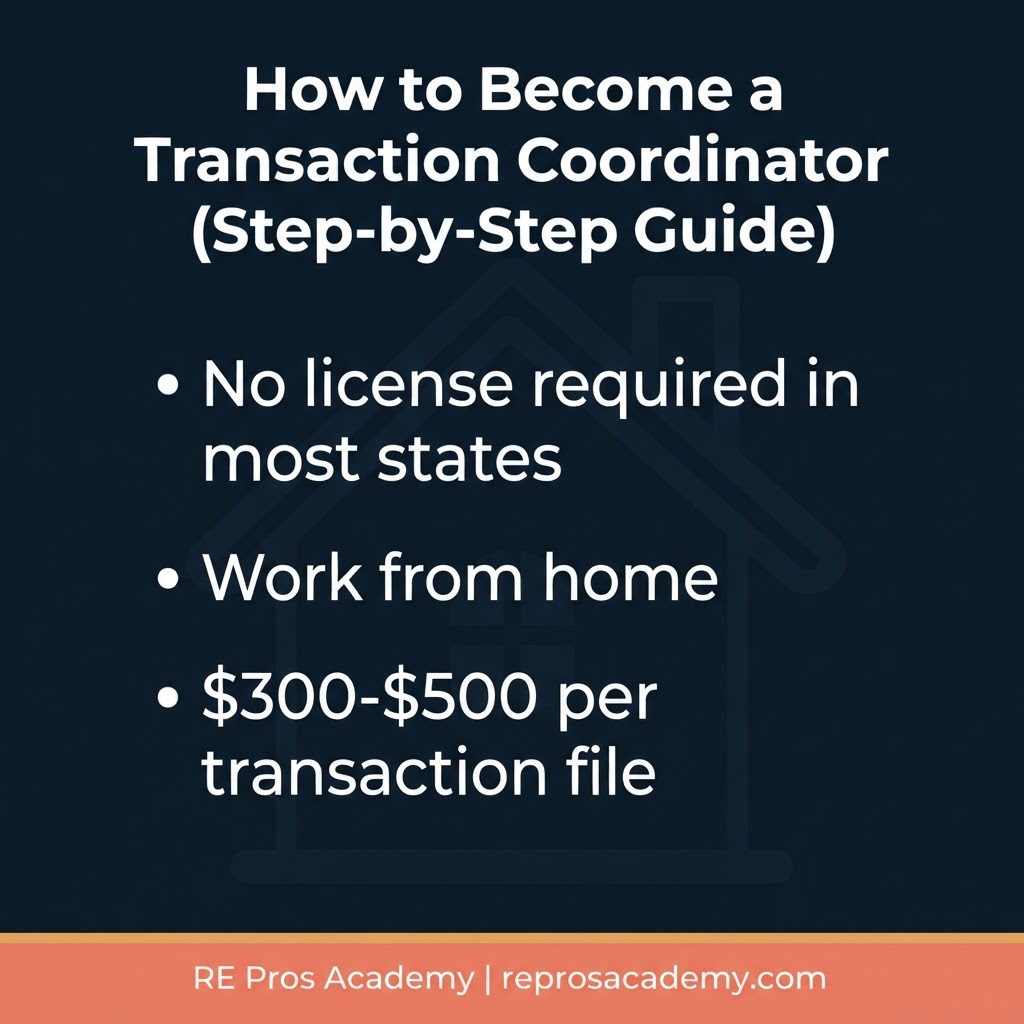
How to Become a Transaction Coordinator: Complete Step-by-Step Guide
If you have been searching for a career that offers flexibility, steady income, and a real path into the real estate industry — without having to sell homes or pass a licensing exam — transaction coordination might be exactly what you are looking for.
Transaction coordinators (often called TCs) are the people who keep real estate deals moving from contract to close. They are detail-driven, deadline-focused, and organized to a fault. And right now, the demand for them is growing fast.
In this guide, you will learn exactly how to become a transaction coordinator — what the role involves, what skills you need, how much you can earn, and the step-by-step path to getting started whether you want a job or want to build your own business.
What Does a Transaction Coordinator Do?
A transaction coordinator manages the administrative side of a real estate transaction from the moment a contract is ratified to the day the deal closes. Think of the TC as the project manager of a real estate deal.
Here is what a typical transaction coordinator handles:
- Opening escrow and communicating with title companies
- Tracking contract deadlines (inspection periods, financing contingencies, appraisal dates)
- Coordinating document collection from buyers, sellers, lenders, and agents
- Submitting compliance files to the brokerage
- Scheduling inspections, appraisals, and closing dates
- Sending weekly status updates to all parties
- Ensuring the file is complete and closed out properly
Every real estate transaction involves dozens of moving parts. A transaction coordinator makes sure none of them get missed.
Why Transaction Coordination Is a Growing Career
The real estate industry is producing more transactions than ever, and agents are stretched thin. Teams are growing. Brokerages are scaling. And the administrative burden on each deal is heavier than it used to be.
Here is why that matters for you:
- Agents would rather focus on lead generation and client relationships than paperwork
- Brokerages face compliance requirements that demand organized, accurate files
- Real estate teams need dedicated support to handle increasing transaction volume
- The rise of remote work has made it normal to hire TCs who work from anywhere
This is not a trend that is going away. As long as real estate transactions happen, someone has to coordinate them.
Do You Need a Real Estate License to Be a Transaction Coordinator?
In most states, no.
Transaction coordination is an administrative role. You are not representing clients, negotiating deals, or providing real estate advice. You are managing paperwork, deadlines, and communication.
That said, state requirements vary. A few states require TCs to hold a license, and some brokerages prefer to hire licensed assistants. Always check your state's specific rules before getting started.
Even in states where a license is not required, understanding real estate terminology and the transaction process is essential. You do not need a license — but you do need knowledge.
Step-by-Step: How to Become a Transaction Coordinator
Step 1: Understand the Real Estate Transaction Process
Before you can coordinate a transaction, you need to understand how one works. Learn the lifecycle of a real estate deal:
- Offer and acceptance (contract ratification)
- Escrow opening
- Earnest money deposit
- Inspection period
- Appraisal
- Financing and loan approval
- Title search and clearance
- Final walkthrough
- Closing and funding
- Post-close compliance and file completion
You do not need to memorize every state-specific forms, but you need to understand the flow, the terminology, and what happens at each stage.
Step 2: Develop the Core Skills
Transaction coordination requires a specific set of skills. Here are the five that matter most:
- Attention to detail. A missed deadline can cost a deal. You need to be the person who catches what others miss.
- Deadline management. You will track multiple timelines across multiple files simultaneously. Being organized is not optional — it is the job.
- Communication. You will be the go-between for agents, clients, lenders, title companies, and inspectors. Clear, professional, timely communication is critical.
- Document organization. You will handle dozens of documents per file. Knowing how to label, store, and retrieve them efficiently is essential.
- Problem-solving. Deals go sideways. Inspections reveal issues. Lenders need more documents. You need to be calm under pressure and resourceful when problems arise.
If you have a background in project management, paralegal work, medical administration, accounting, or any role that required juggling deadlines and details, you already have a strong foundation.
Step 3: Get Trained
You do not need a college degree or a real estate license to become a transaction coordinator, but you do need training. Here are your options:
- Online courses. Platforms like RE Pros Academy offer structured training that walks you through the entire transaction process, the documents you will handle, and the systems you will need.
- Brokerage training. Some brokerages hire and train entry-level TCs. If you are willing to start in an in-office or junior role, this can be a great way to learn on the job.
- Mentorship. If you know an experienced TC or an agent willing to teach you, ask if you can shadow them on a few transactions. Hands-on experience is invaluable.
- Self-study. Read your state's real estate commission website, study common transaction forms, and learn the terminology. It is not a replacement for structured training, but it builds your knowledge base.
The most efficient path is a combination of structured training (like a course) plus hands-on practice.
Step 4: Choose Your Path: Employee or Business Owner
This is one of the most important decisions you will make early on. There are two main paths:
Path A: Get hired as a TC. You work for a real estate team, brokerage, or company as a W-2 employee or part-time contractor. You get steady income, benefits (potentially), and built-in training. The trade-off is less flexibility and a ceiling on your income.
Path B: Start a TC business. You offer transaction coordination services to multiple agents and teams as an independent contractor. You set your own rates, choose your clients, and control your schedule. The trade-off is that you have to find your own clients and manage the business side.
Both paths are valid. Many people start as employees to learn the ropes, then transition to owning their own business once they have confidence and experience.
Step 5: Set Up Your Systems and Tools
Whether you work for someone else or for yourself, you will need the right tools:
- Transaction management software. Platforms like RE Pro Ops help you track deadlines, manage documents, and keep every file organized in one place.
- Checklists and SOPs. Create a standard checklist for every transaction so nothing gets missed. This becomes your most valuable asset.
- Cloud storage. Google Drive, Dropbox, or a transaction management platform to store and organize files.
- Calendar and task management. You will live and die by your calendar. Use it to track every deadline on every file.
- Email templates. Build a library of templates for common communications — status updates, document requests, closing reminders.
Want to discover which real estate support career path is right for you? Download the free RE Pros Academy career guide at reprosacademy.com/career-guide.
Step 6: Find Your First Clients or Job
If you are looking for a job:
- Search real estate job boards and Indeed for "transaction coordinator" roles
- Reach out to local brokerages and real estate teams directly
- Join real estate Facebook groups and LinkedIn communities
- Create a profile on real estate virtual assistant marketplaces
If you are building a business:
- Start with your network. Do you know any real estate agents? Offer to coordinate one transaction for free or at a discount to build your portfolio.
- Attend local real estate networking events and association meetings.
- Create a simple website or LinkedIn profile that clearly describes your services.
- Reach out to top-producing agents in your area. They are the ones who need the most help.
- Offer a free consultation or a trial file to demonstrate your value.
The hardest part is landing your first client. Once you have successfully closed a few transactions and can show results, the word-of-mouth referrals start to build.
Step 7: Scale and Specialize
Once you are established, you can grow by:
- Taking on more files (increasing your monthly revenue)
- Raising your per-file rate as your experience grows
- Adding complementary services like listing coordination or operations management
- Hiring and training junior TCs to handle volume while you manage the business
- Specializing in a niche (new construction, luxury, commercial, relocation)
How Much Does a Transaction Coordinator Make?
Transaction coordinator income depends on whether you are an employee or a business owner, your market, and your experience level.
Employee TCs: Typically earn $45,000–$70,000+ per year depending on market and experience.
Independent TCs: Typically charge $300–$500 per transaction file. A TC managing 10–15 files per month can earn $3,000–$7,500+ per month. Experienced TCs handling 20+ files can earn significantly more.
Business owners who hire a team: Can scale to $100,000–$200,000+ in annual revenue by managing multiple TCs and servicing a larger client base.
Common Mistakes New Transaction Coordinators Make
Pricing too low. One of the most common mistakes new TCs make is undercharging. You are providing a professional service that protects agents and their transactions. Price accordingly.
Skipping training. Trying to learn on the job without any structured training leads to mistakes — and in real estate, mistakes can be expensive. Invest in your education before you take on your first file.
Not using systems. Relying on memory or scattered notes instead of checklists, calendars, and transaction management software is a recipe for missed deadlines and unhappy clients.
Taking on too many files too fast. Scale gradually. It is better to handle 5 files flawlessly than 15 files poorly. Your reputation is everything in this business.
Not marketing themselves. Many TCs are great at the work but terrible at getting clients. Build your personal brand, ask for referrals, and always be networking.
Frequently Asked Questions
How long does it take to become a transaction coordinator?
With focused training, you can learn the fundamentals in 4–8 weeks. Landing your first client or job may take another 30–60 days of active outreach. Most people are working within 2–3 months of starting their training.
Do I need any specific software?
You need a system for tracking deadlines and managing documents. Transaction management platforms like RE Pro Ops are purpose-built for this. Many TCs also use Google Workspace, Trello, or Asana as supplementary tools.
Can I work as a TC part-time?
Yes. Many independent TCs start part-time while keeping their day job. If you handle 5–8 files per month, you can earn $1,500–$4,000+ working part-time from home.
What is the difference between a transaction coordinator and a real estate assistant?
A real estate assistant handles general administrative tasks (email, scheduling, social media). A transaction coordinator specifically manages the transaction process — deadlines, documents, compliance, and closing coordination. TC work is more specialized and typically commands higher rates.
Is transaction coordination a stable career?
Real estate is cyclical, but the need for transaction coordination is consistent year-round. In slower markets, agents need help staying organized and efficient. In busy markets, they need help managing volume. Skilled TCs are valuable in any market condition.
Your Next Steps
- Research your state's requirements for transaction coordinators.
- Take inventory of your transferable skills — you likely already have more than you think.
- Get trained through a structured program like RE Pros Academy.
- Set up your systems before you take on your first file.
- Start networking and outreach to land your first client or job.
Transaction coordination is one of the most accessible, flexible, and in-demand careers in real estate. You do not need a license. You do not need sales skills. You need organization, attention to detail, and the right training.
Ready to build your future in real estate support? Explore RE Pros Academy at reprosacademy.com and learn how to create a flexible career or business as a transaction coordinator.
Ready to Build Your Real Estate Career?
Get lifetime access to courses, templates, systems, and a community of real estate professionals.
Explore Membership Options